1. Establish relevance instantly
User question: “Am I in the right place?”
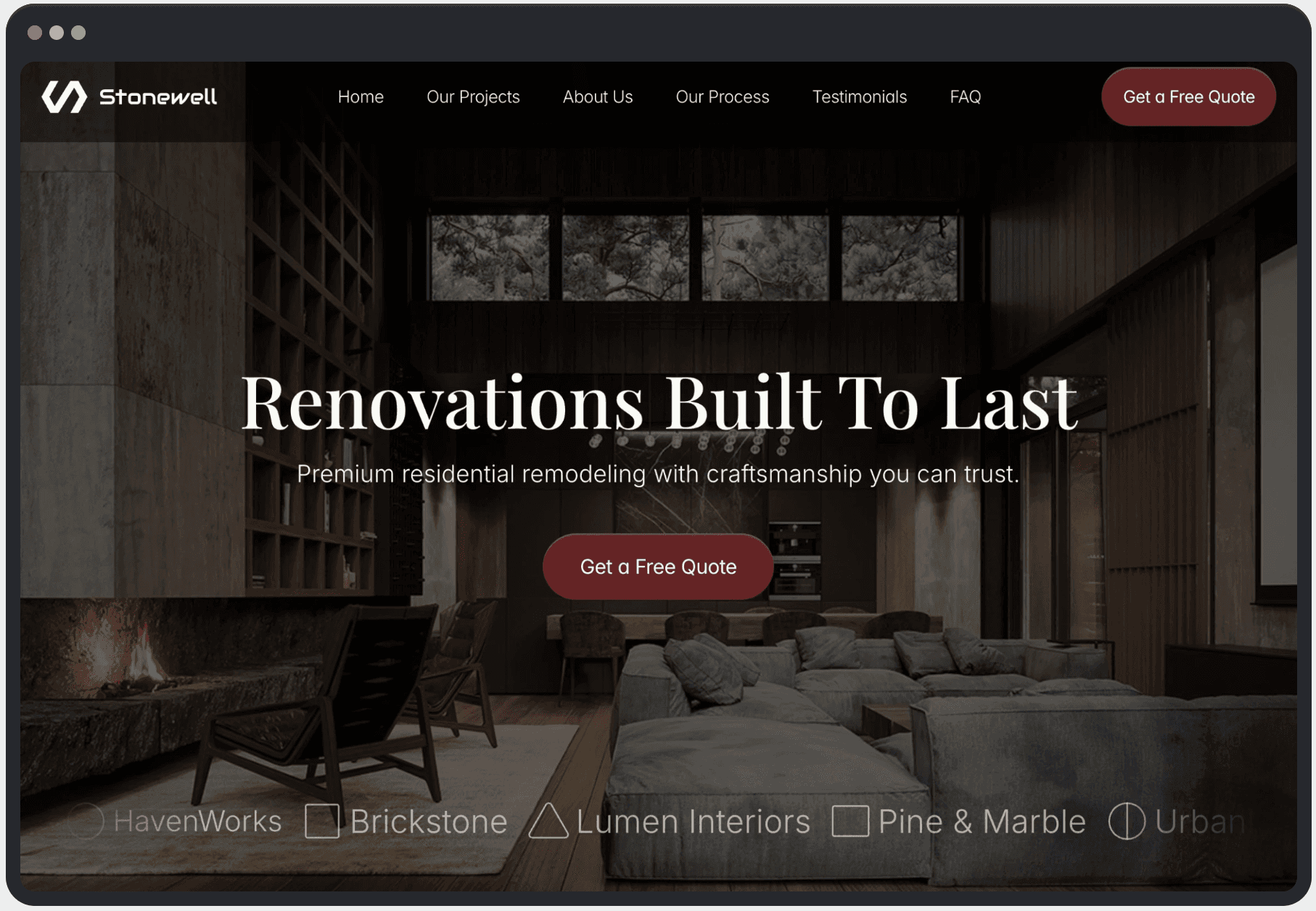
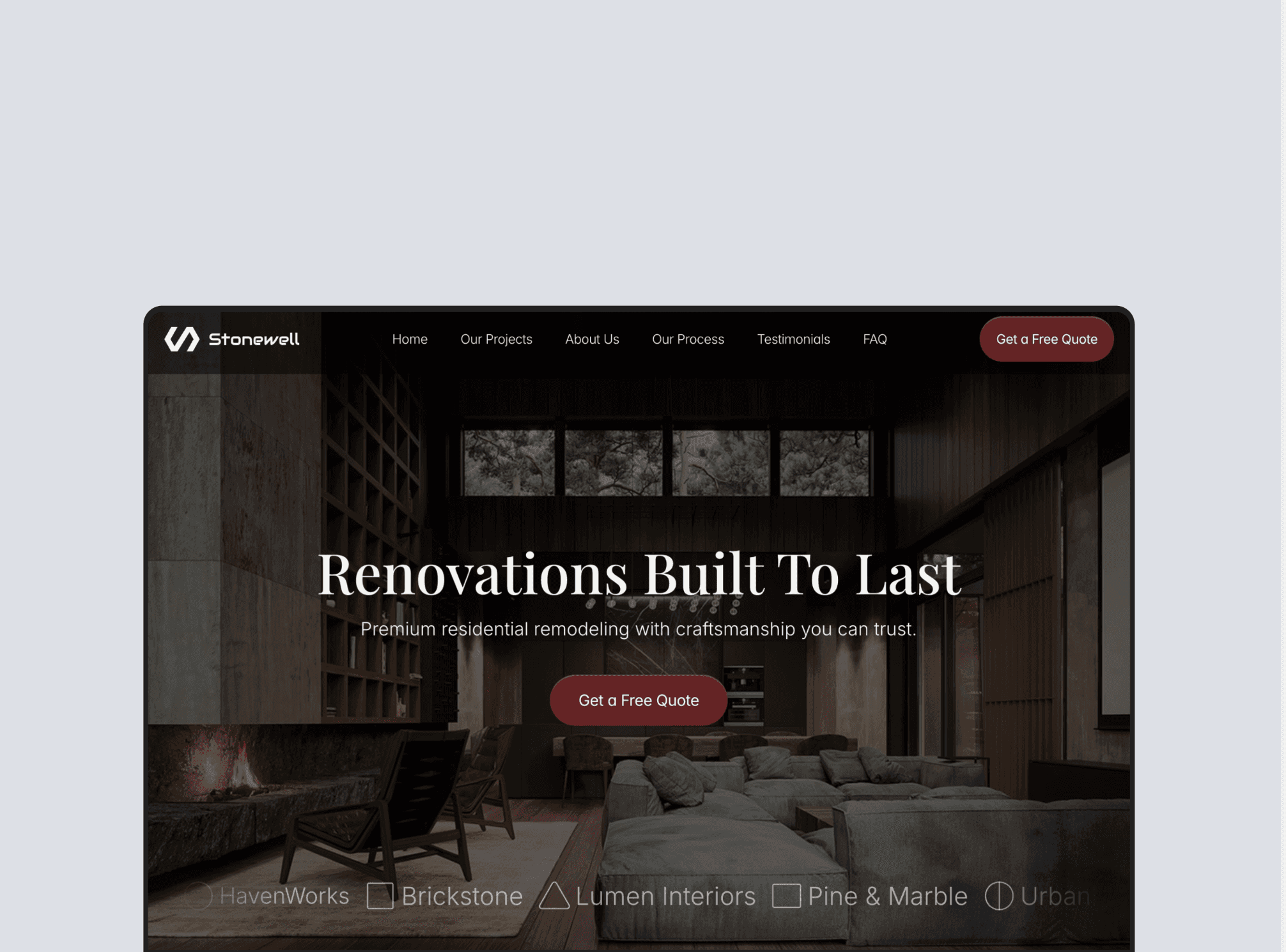
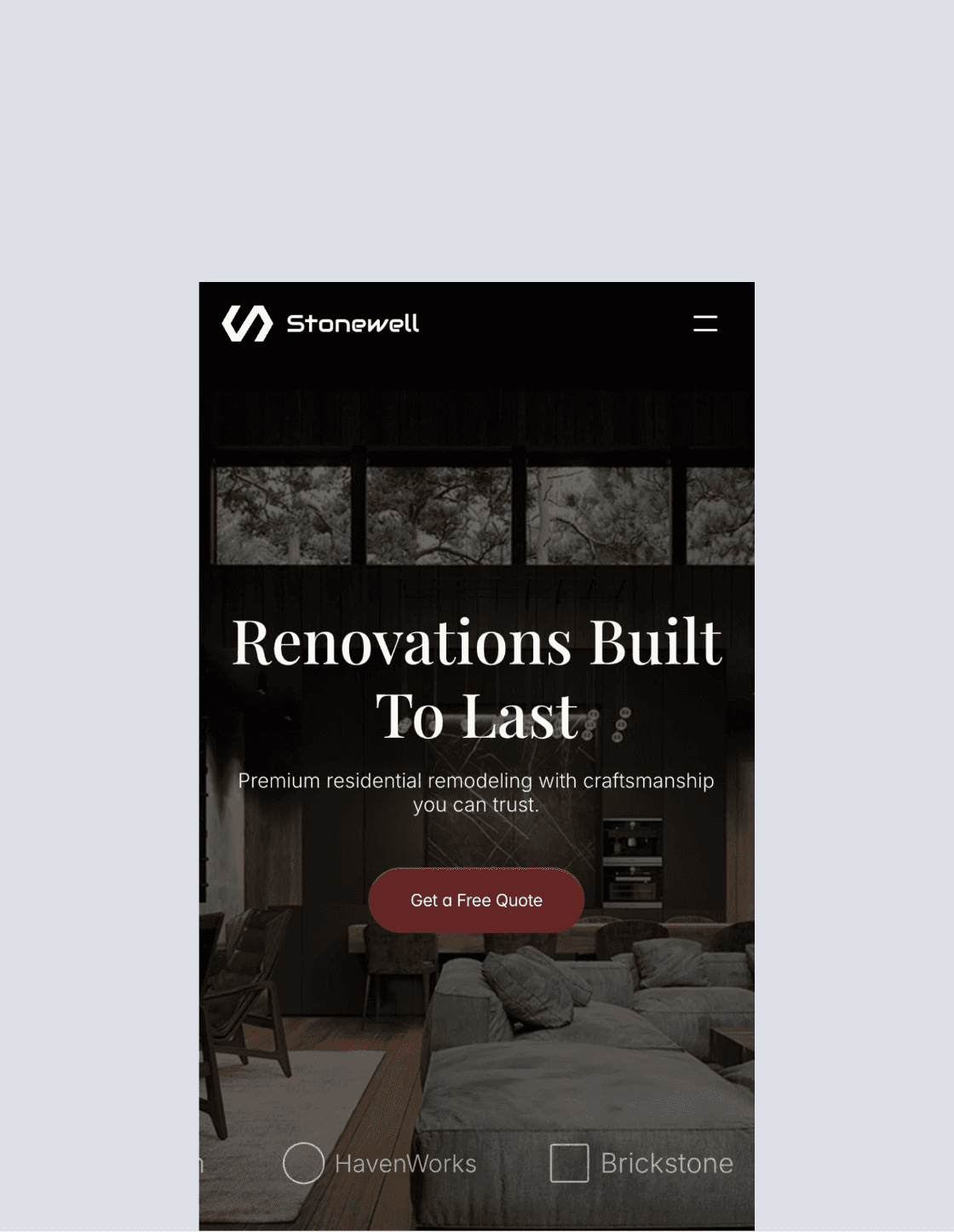
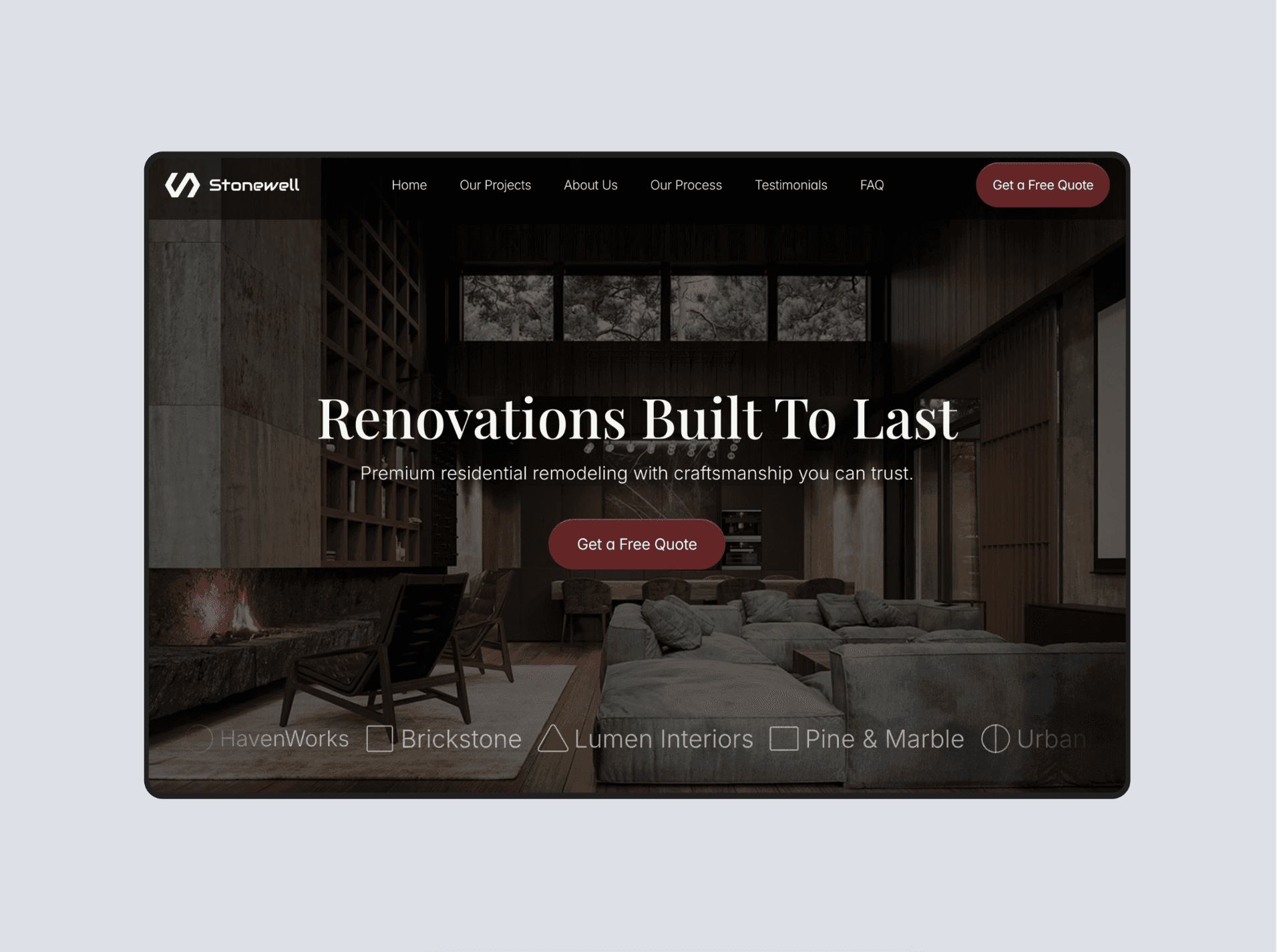
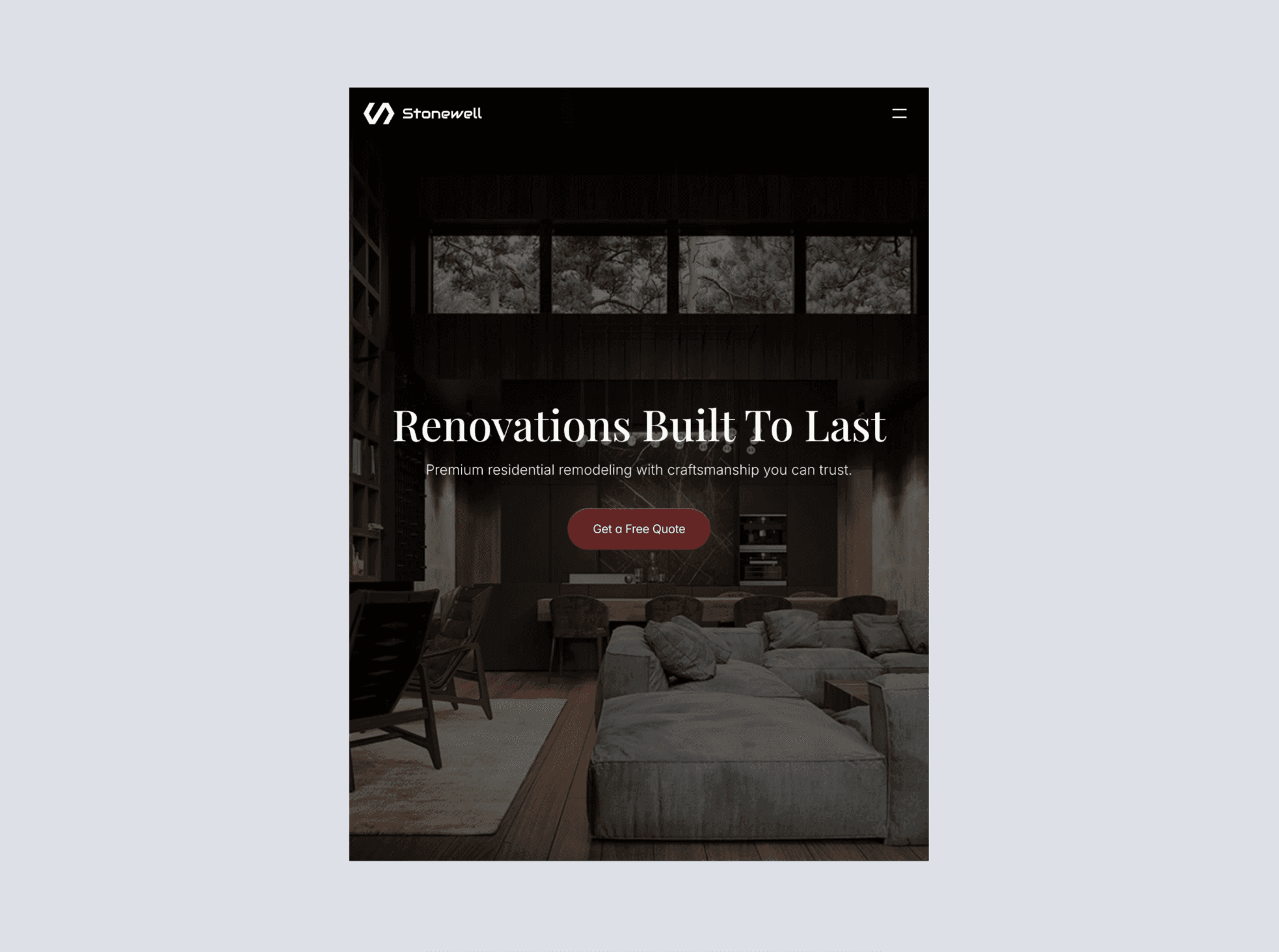
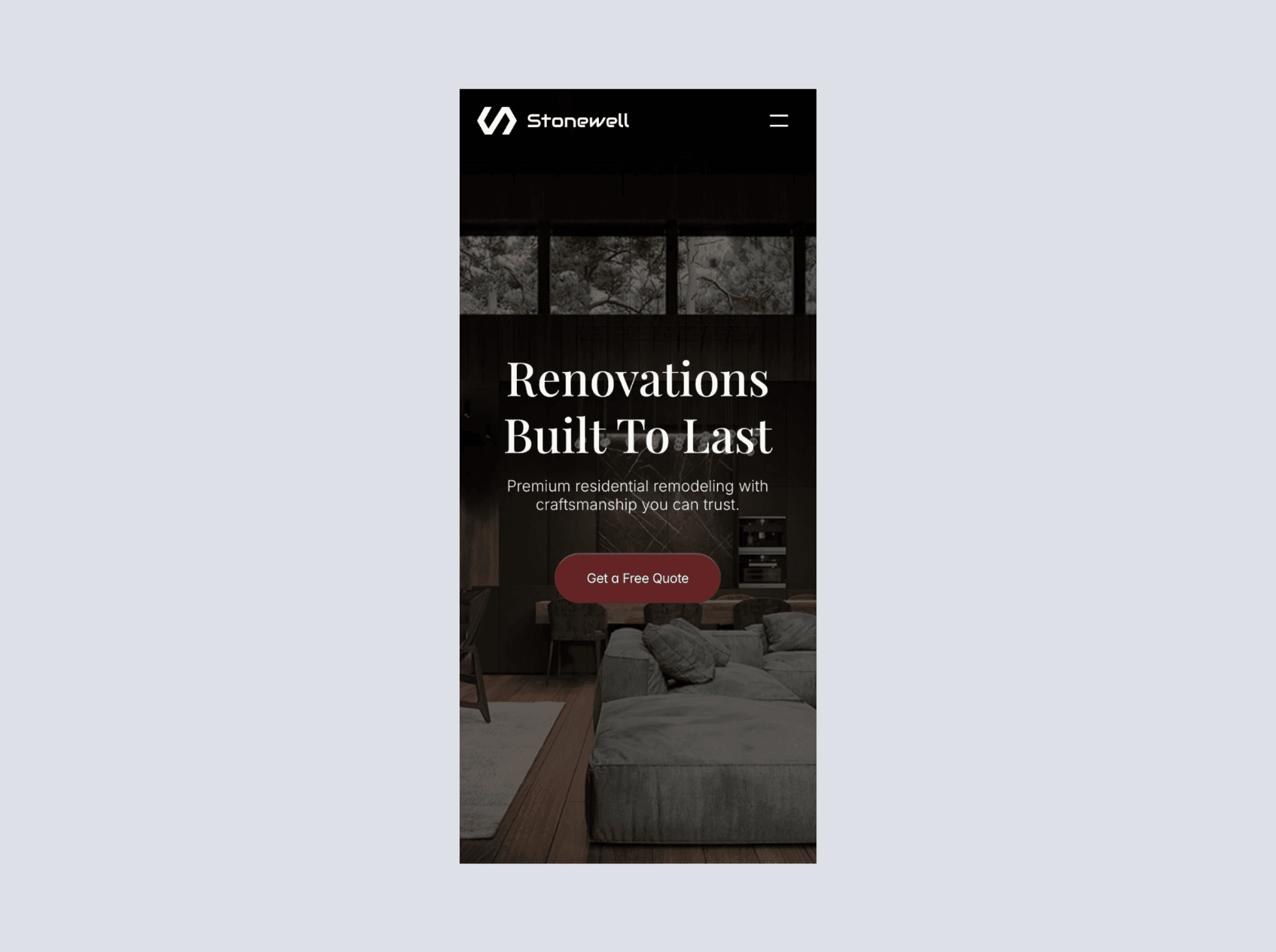
The hero section immediately clarifies who the site is for, what’s offered, and the outcome, allowing visitors to judge relevance within seconds.
Real renovation imagery grounds expectations in actual work, not abstract ideas.
2. Reinforce authority before commitment
User question: “Can I trust these people?”
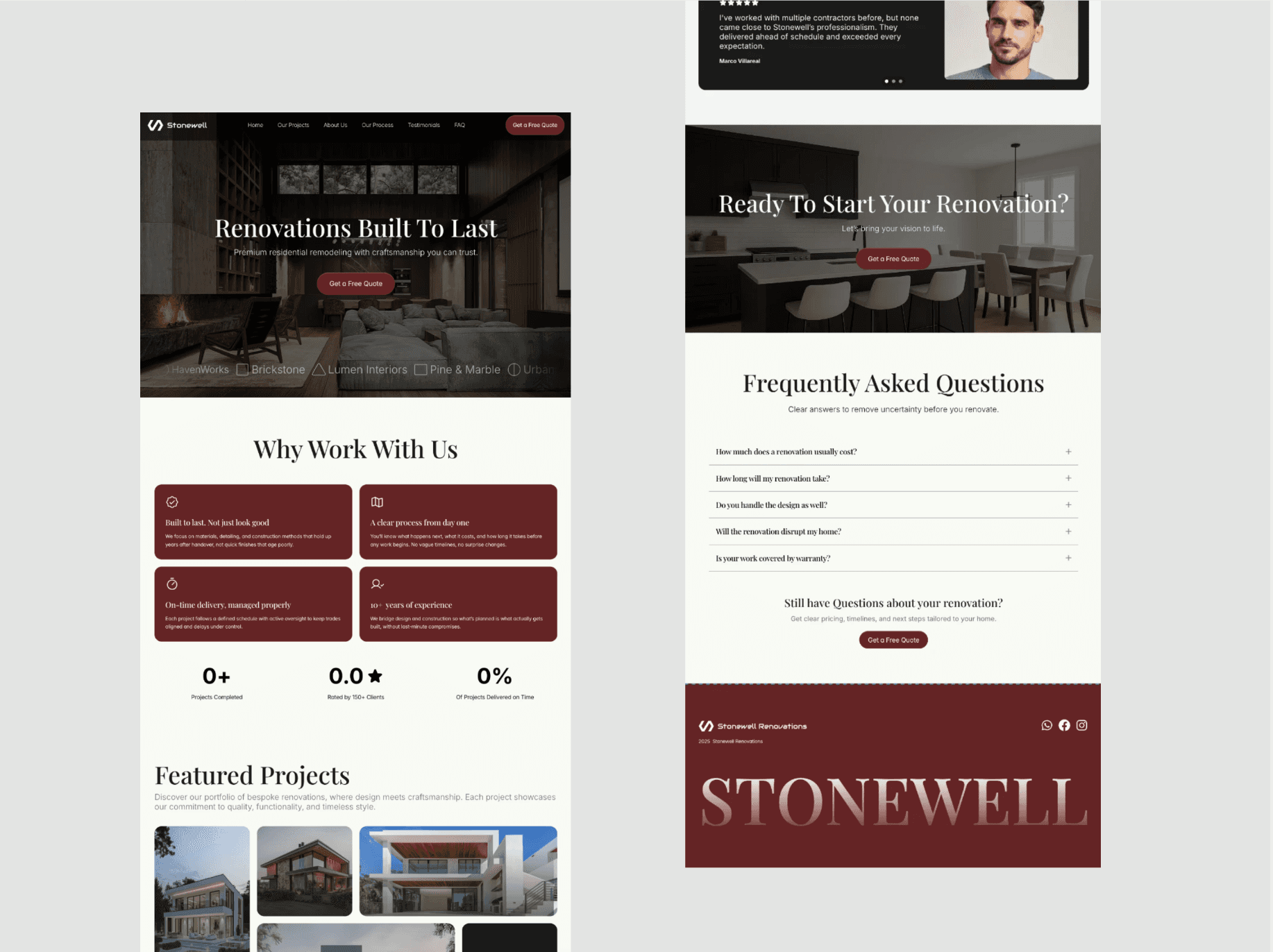
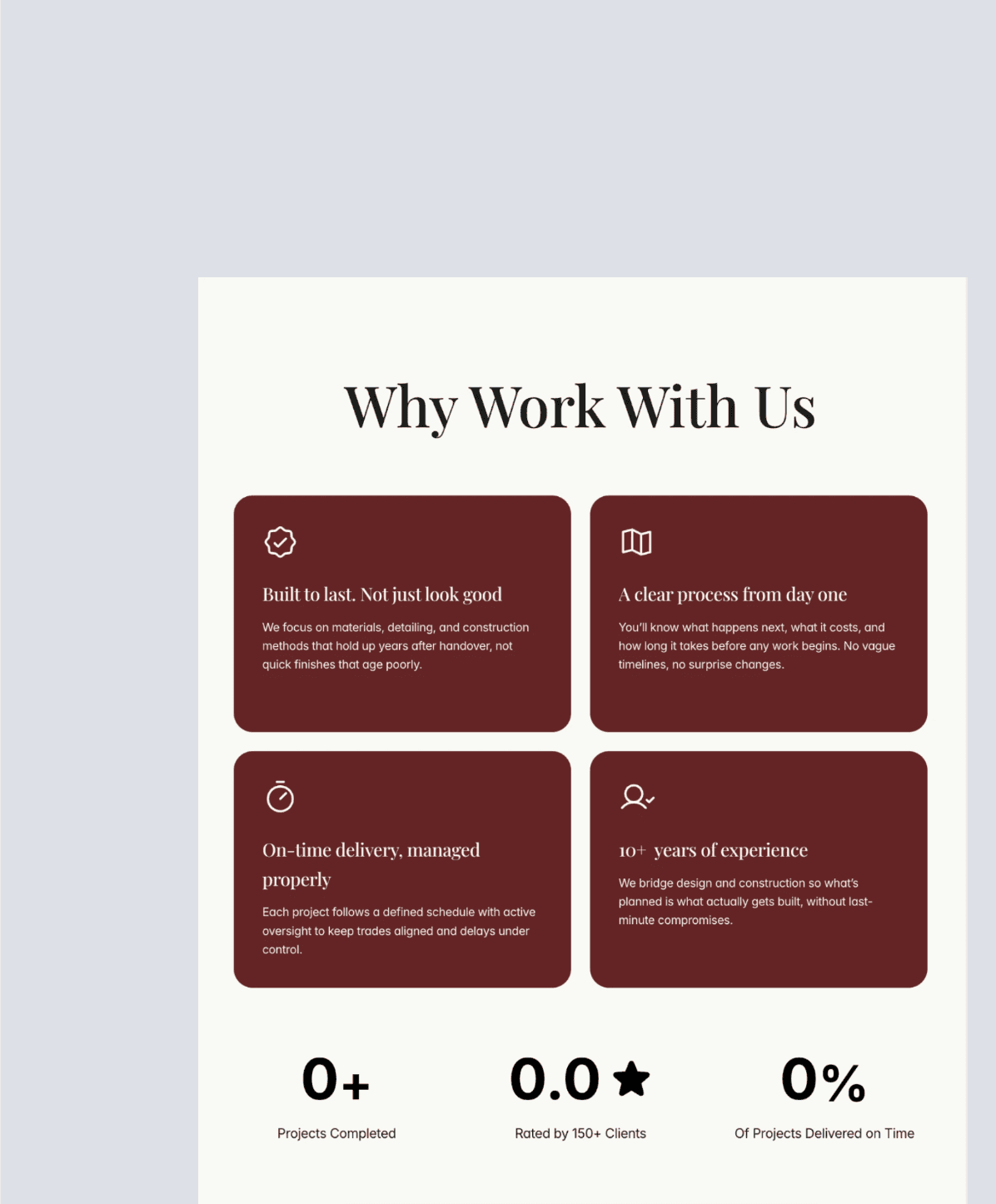
The “Why work with us” section builds trust through experience, positioning, and proof, answering why this contractor is the right choice.
Risk is reduced and credibility is built before asking users to engage further.
3. Prove execution capability visually
User question: “Can they actually deliver?”
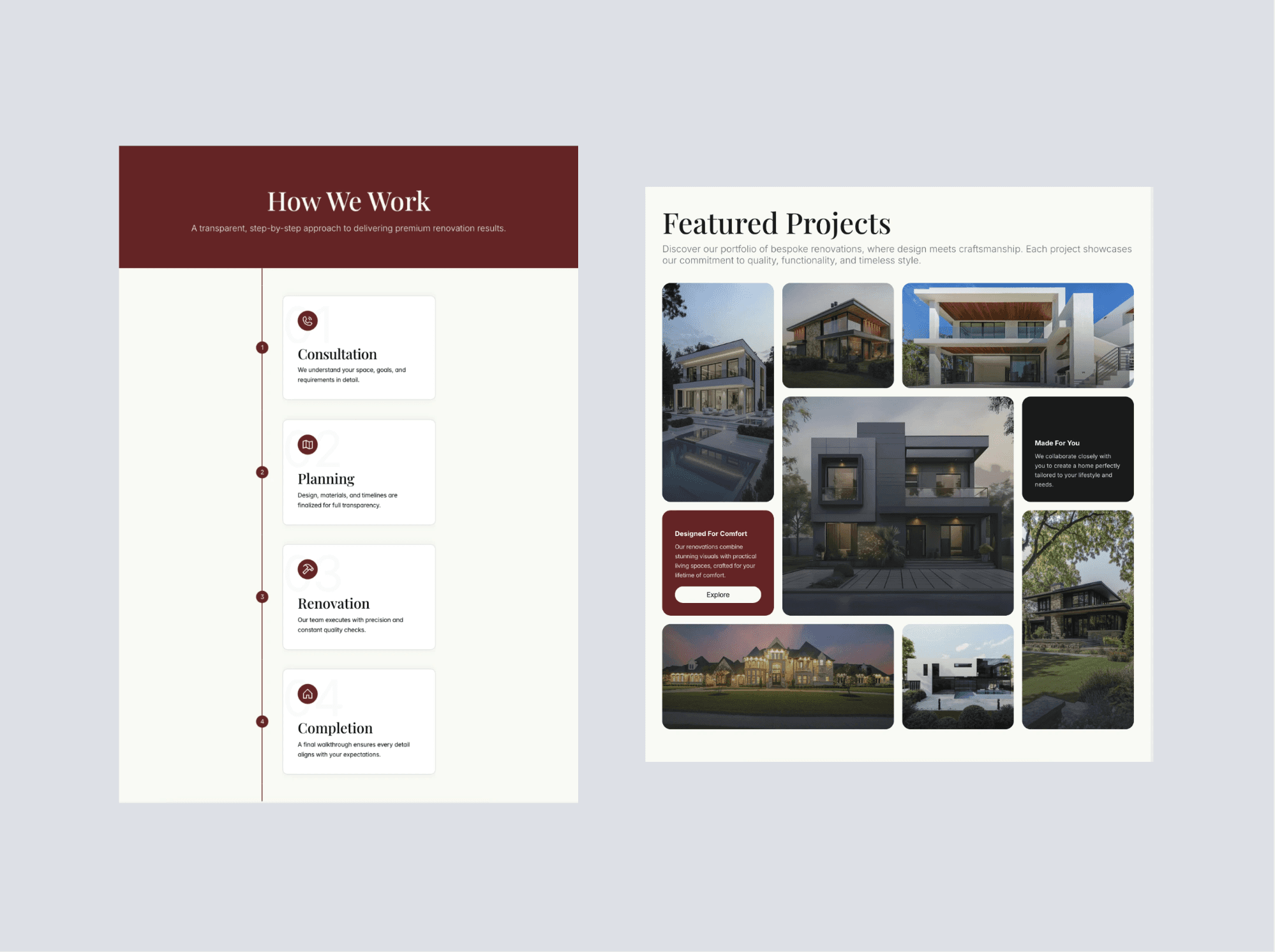
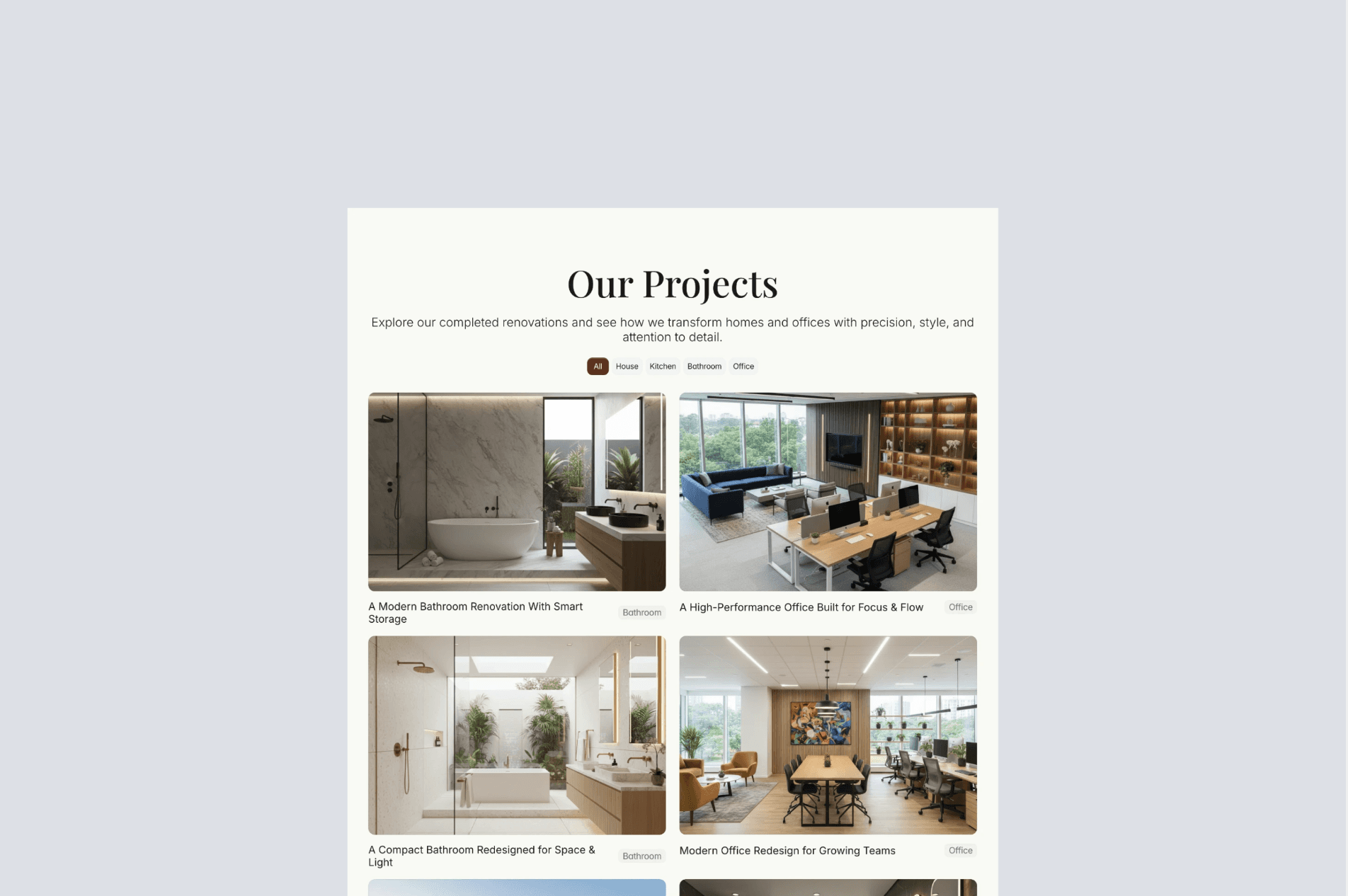
Completed projects are showcased to demonstrate real execution quality, shifting belief from claims to evidence.
Seeing results removes doubt faster than explanation.
4. Confirm problem–solution fit
User question: “Do they solve my specific problem?”
The services section defines what problems are handled and what aren’t, helping users quickly determine fit.
This prevents misalignment and wasted inquiries.
5. Reduce uncertainty through process
User question: “What will working with them actually be like?”
The process section outlines how projects move from start to finish, setting expectations around communication and workflow.
Clarity lowers hesitation in high-commitment decisions.
6. Ask for action only after trust
User question: “What’s the next step?”
A low-pressure CTA invites action only after confidence is built, keeping the decision user-led.
No urgency. No friction.